
 1 month ago
74
1 month ago
74

What comes to your mind when you hear the word “evangelical”? It is a word that could mean a great many things, depending on where you live. In Germany, evangelische basically means “Protestant.” In the United States, evangelical can mean white, Anglo-Saxon, and (vaguely) Protestant. In the United Kingdom, evangelical might refer to a particular chapter within the Church of England. Indeed, some worry that the term is so nebulous as to be meaningless.
With such variegations, should we concern ourselves with a distinctively evangelical approach to studying the Bible? And, if so, what would it look like?
Table of contents
Who are evangelicals?
I am more upbeat about the designation evangelical. I see evangelicalism as a renewal movement within global Protestantism committed to the advance of the gospel.
Evangelicalism is a loose movement of diverse churches committed to a concerted and cooperative effort to promote the gospel. Such a promotion happens by bringing people into a personal relationship with Jesus, supporting global missions, and showing a commitment to shared social projects—like ending human trafficking or helping to tackle the endemic of poverty. Above all, we might say that evangelicalism is typified by a belief in Scripture’s abiding truthfulness, the redemptive power of the cross, and deep and enduring affection for the Lord Jesus Christ.
The beauty of evangelicalism is that it can include people from different churches, different denominations, even different parts of the world, yet all share a basic theology, religious experience, and missional impetus that unites them. That is premised on the notion that the things that unite us like the gospel are ultimately far stronger than anything that might drive us apart.
J. I. Packer (a Calvinist Anglican) and Thomas Oden (an Arminian Methodist) joined forces to compose a book called One Faith: The Evangelical Consensus (InterVarsity, 2010), which shows the agreement between a number of evangelical statements of faith written between 1950 and 2000 on key doctrines. The book reveals just how much shared belief there is in the evangelical family. Accordingly, whatever differences there is within the evangelical house, we can still speak authentically of one evangelical faith.1
What do evangelicals believe?
There are a number of different ways to describe evangelicalism. It really depends on whether you think the definition of such a group should be historical, sociological, theological, or a mixture of those things.
I’m rather fond of the explanation of evangelicalism given by Alister McGrath, who has developed a taxonomy that I think rings true. According to McGrath, the core beliefs of evangelicals are:
- The supreme authority of Scripture for knowledge of God and as a guide to Christian living
- The majesty of Jesus Christ as incarnate God and Lord, and the Savior of sinful humanity
- The lordship of the Holy Spirit
- The need for personal conversion
- The priority of evangelism for both individual Christians and for the church as a whole
- The importance of Christian community for spiritual nourishment, fellowship, and growth2
However, I’d want to add to those beliefs certain habits, such as:
- Regular Bible study, in private and in groups
- Devotion to prayer, in private and in groups
- Regular worship with like-minded people
- A concern for personal holiness and humility
- Support of or participation in various parachurch ministries, like university missions or World Vision
Evangelicals & the Bible
So what is an explicitly evangelical approach to the Bible?
I think Francis Watson is correct when he comments: “To be ‘evangelical’ is to read Scripture in the light of the euangelion that lies at its heart.”3 In a loop of authority, because we believe the gospel, we believe the Scriptures, and because we believe the Scriptures, we believe the gospel!4
To tease that out more fully, I would say that an evangelical approach to Scripture involves commitments to the following:
1. Scripture’s inspiration, authority & truthfulness
Evangelicals affirm that Scripture carries God’s will and purpose, and so is authoritative.
Scripture comes via the Holy Spirit, who inspired human authors to write words to various people in various ages in such a way as to communicate to them an authentic message from God.
2. Scripture’s historical reliability & interpretation
For evangelicals, Scripture is historically trustworthy, even while Scripture should be interpreted within its original historical, cultural, literary, and canonical contexts.
That is not to say that one can prove the truth of every event in Scripture, but there is a conviction that God’s Word is true about the matters upon which it speaks, especially as it relates to God’s revelation of himself to Israel and through Jesus Christ.
3. Scripture as God’s redemptive story
For evangelicals, Scripture is not simply a deposit of facts or rules to be obeyed; rather, Scripture concerns itself with the overarching narrative of God’s redemptive work in history, centered on Israel and culminating in Jesus Christ. Evangelicals see in Scripture an unfolding drama of God’s kingdom breaking into the world, a drama which Scripture testifies to, and which the church is called to participate in.
4. Scripture’s Christocentric interpretation
For evangelicals, their gospel-centered approach results in a Christocentric type of reading of Scripture.
The evangelists and apostles claimed that Scripture pointed to Jesus’s life, death, and resurrection as the pivot in God’s plan to put the world to rights, something prophesied and intimated across the Torah, Psalms, and Prophets (see Luke 4:21; 18:31; 24:25–27, 44; John 5:46; Acts 13:32–33; Rom 1:2; 1 Cor 15:3–4). As Graeme Goldsworthy says, “The hermeneutic center of the Bible is therefore Jesus in his being and in his saving acts—the Jesus of the gospel.”5
5. Scripture’s canonical unity
For evangelicals, Scripture is read as a unified whole, with attention to how individual books function within the broader canonical witness. This involves both a synchronic reading (understanding texts within their immediate literary context) and diachronic reading (tracing themes across the scriptural corpus).
The biblical canon provides a context in which Scripture is understood, interpreted, and applied. In other words, the best way to test your interpretation of Scripture is to see if it lines up with the rest of Scripture.
6. Scripture’s practical application
Evangelicals tend to be pragmatic people. They are always interested in the application or dividends of a reading of Scripture. Accordingly, evangelicals intuitively ask the question “So what?” when it comes to reading Scripture in order to derive responsible applications for the individual, the church, and the community of faith at large.
The Bible certainly conveys knowledge, but it also calls for action, and evangelicals tend to be very interested in application.
An evangelical approach to Scripture is one that begins by delighting in the gospel, finds in Scripture the story and substance of the gospel, and then exhorts us to live a life worthy of the gospel.
To summarize, we might say that an evangelical approach to Scripture is one that begins by delighting in the gospel, finds in Scripture the story and substance of the gospel, and then exhorts us to live a life worthy of the gospel.
Evangelicals & Bible study
So what does an evangelical approach to Bible study look like, in practice?
Well, there are many ways to read Scripture, either on your own, as part of a study group, or within a church. There are a host of tools available to help readers, and different strategies one might adopt. However, in my experience, serious Bible study in the evangelical tradition is marked by the following habits and approaches.
1. Begin with prayer & dependence on God
Start each study session by asking the Holy Spirit for illumination to help us better understand Scripture. Ask the Holy Spirit to guide you into the truth and to keep you from error.
Approach Scripture with humility, recognizing your need for divine guidance to grasp both the text’s meaning and its application to your life.
2. Read extensively before studying intensively
It helps to read large portions of Scripture from the same biblical book to help properly grasp its overarching narrative before diving into detailed verse-by-verse analysis. Read entire books, or at a minimum complete chapters, both before and after the section under examination, to understand how individual passages fit within their broader literary context.
3. Use multiple translations
It is useful to compare different Bible translations to better understand the sense of the text. Additionally, pay attention to footnotes that explain translation choices.
I find it helpful to try to read a literal translation like the NKJV, NASB, or ESV; then look at a dynamic equivalence translation like the NIV, NRSV, or CEB; and finally look at paraphrases like the Message and the Living Bible.
3. Wrestle with the passage
Any scriptural text will inevitably raise questions about context, meaning, significance, and application. Watch out for key theological terms. Look for elements of background that you might be unfamiliar with. Work alongside others to discuss and discern such things, sharing your questions with each other and humbly trying to answer them.
4. Connect the text to Jesus & the canon
The penultimate stage in Bible study is discerning how the passage you are studying illuminates the gospel of Jesus and relates to wider themes and threads across the biblical canon.
5. Application
At the very end, we should consider how Scripture shapes not just our beliefs but our character, our relationships, vocation, ministry, and life decisions. Explore how the text moves you to love God and love your neighbor, to pursue holiness and mission, and to seek an authentic Christian life lived to the glory of God.
Read to improve your Bible study? Start a free 30-day trial of Logos.
Conclusion
At its core, Bible study done evangelically reflects the conviction that the good news of Jesus shapes how we read Scripture, and, furthermore, that Scriptures carry divine authority, truth, and power to shape the believer’s life.
Evangelicalism brings together a diverse cross-section of people from across denominations and cultures around shared commitments to the gospel, the authority of Scripture, and the necessity of personal conversion. What unites evangelicals is not uniformity of practice or identical theological detail, but a common center in Jesus Christ and his cross and resurrection. For this reason, Bible study within the evangelical tradition is intentionally Christocentric, canonical, and practical. Evangelicals are those who make it a habit (or develop an instinct) to read Scripture within the context of the whole biblical narrative in a way that takes us to the feet of Jesus and asks how holy Scripture calls us to action in daily life.
Practically speaking, evangelical Bible study begins with prayerful dependence on the Spirit, is rooted in close reading of the text aligned with appreciation for historical context, and culminates in application. Evangelicals are not content with leaving Scripture in the realm of theory; rather, they ask how its truths shape character, inspire mission, and invite us towards a deeper love for God and neighbor. At its best, evangelical Bible study forms disciples of Jesus who live out the story of Scripture with humility, courage, and joy. It is both a discipline of the mind and an encounter of the heart, calling believers to live faithfully under God’s Word in the service of his kingdom.
Mike Bird’s suggested resources on evangelicalism and evangelical Bible study
- Treier, Daniel J., and Timothy Larsen, eds. The Cambridge Companion to Evangelical Theology. Cambridge University Press, 2007.
- Packer, J. I., and Thomas C. Oden. One Faith: The Evangelical Consensus. InterVarsity Press, 1999.
- Hutchinson, Mark, and John Wolffe. A Short History of Global Evangelicalism. Cambridge University Press, 2012.
Evangelical Theology: A Biblical and Systematic Introduction, 2nd ed.
Price: $59.99
-->Regular price: $59.99
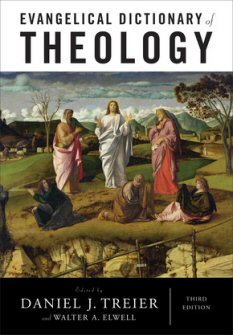
Evangelical Dictionary of Theology, Third Edition | EDT
Price: $59.99
-->Regular price: $59.99
Across the Spectrum: Understanding Issues in Evangelical Theology, 3rd ed.
Price: $35.99
-->Regular price: $35.99
Can We Still Believe the Bible? An Evangelical Engagement with Contemporary Questions
Price: $23.99
-->Regular price: $23.99
The Dominance of Evangelicalism: The Age of Spurgeon and Moody (A History of Evangelicalism)
Save $6.00 (25%)
Price: $17.99
-->Regular price: $23.99
Gospel-Centered Hermeneutics: Foundations and Principles of Evangelical Biblical Interpretation
Save $8.50 (25%)
Price: $25.49
-->Regular price: $33.99
Evangelical study Bibles
NIV Study Bible: Notes (Fully Revised Edition)
Save $11.00 (20%)
Price: $43.99
-->Regular price: $43.99
NIV Biblical Theology Study Bible Notes (NIVBTSB)
Save $10.00 (20%)
Price: $39.99
-->Regular price: $39.99
ESV Study Bible (Notes only)
Save $5.01 (11%)
Price: $39.99
-->Regular price: $39.99
CSB Study Bible (notes only)
Save $6.00 (20%)
Price: $23.99
-->Regular price: $23.99
NIV Bible Speaks Today Study Bible Notes
Save $5.00 (25%)
Price: $14.99
-->Regular price: $19.99
Related content
- What Is This Thing Called Bible Study?
- How to Lead a Bible Study Everyone Loves: 4 Essentials
- How to Ask Excellent Bible Study Discussion Questions
- Is There Such a Thing as an Evangelical Approach to Theology?
- Will Evangelicals Lead a Revival in Dogmatic Theology?








 English (US) ·