
 1 month ago
57
1 month ago
57
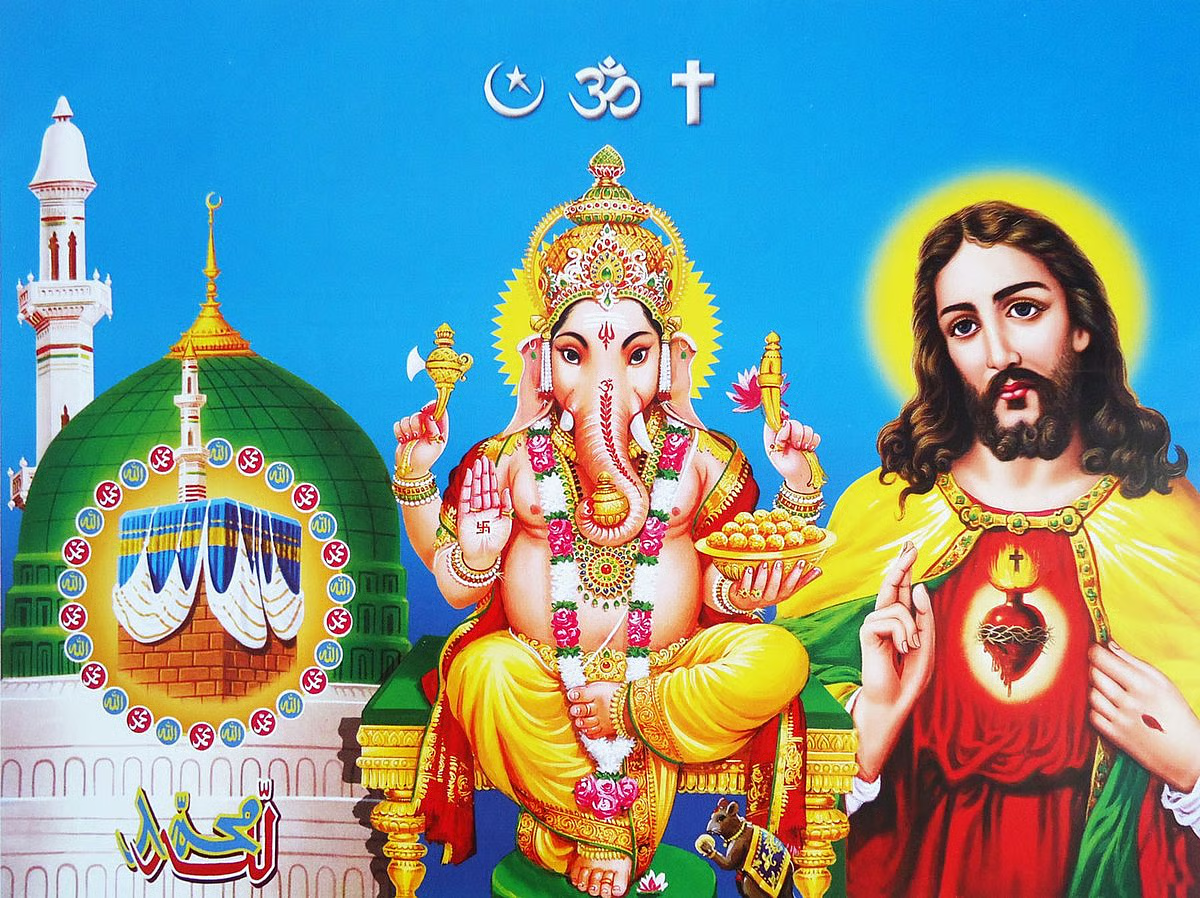
A popular claim in modern culture is that all gods are basically the same and all religions are just different paths up the same mountain. This idea sounds peaceful tolerant and inclusive. It avoids conflict and removes the uncomfortable idea that anyone could be wrong. But when examined closely the claim collapses under its own weight.
Religions do not teach the same things. Some claim God is personal while others say God is an impersonal force. Some teach many gods others teach one. Some say salvation comes through works others through grace. Some deny sin altogether while others place it at the center of human existence. These beliefs are not minor differences. They directly contradict one another. They cannot all be true at the same time.
Saying all gods are the same requires ignoring what religions actually teach. It is not respectful. It is dismissive. It rewrites belief systems to make them fit a modern preference for comfort over truth. Truth by nature excludes what contradicts it.
Scripture directly addresses this issue. Isaiah 45:5 says I am the Lord and there is none else there is no God beside me. The Bible does not present God as one option among many. It presents Him as exclusive by nature. That claim is either true or false but it cannot be softened without losing meaning.
Some argue that calling one belief true makes others wrong and that feels arrogant. But truth claims are not arrogance. They are unavoidable. To say all gods are the same is itself a truth claim that declares every religion wrong except the one making that statement. Neutrality is an illusion.
Jesus made one of the most controversial claims in history. John 14:6 records Him saying I am the way the truth and the life no man cometh unto the Father but by me. This statement leaves no room for religious blending. Either Jesus was who He claimed to be or Christianity is false. There is no middle ground.
Scripture also warns against creating gods that fit human comfort. Exodus 20:3 says thou shalt have no other gods before me. False gods are not only statues. They are ideas shaped to avoid accountability. A god who never confronts sin never judges evil and never demands surrender is easy to accept but powerless to save.
The Bible explains why humans invent alternative beliefs. Romans 1:25 says they changed the truth of God into a lie and worshipped the creature more than the Creator. This is not about ignorance but preference. People often choose beliefs that affirm desire rather than challenge it.
If all gods were the same then truth would be meaningless and faith would be unnecessary. But Scripture insists truth matters and eternity is real. 1 Kings 18 shows Elijah challenging false prophets asking how long halt ye between two opinions. That question still stands.
The issue is not whether all beliefs deserve respect. People do. The issue is whether all beliefs are true. Scripture answers clearly. Many paths exist but truth is singular. The real question is not whether different gods are the same but whether we are willing to accept truth even when it contradicts what feels comfortable.






 English (US) ·