
 3 weeks ago
44
3 weeks ago
44

Christianity would not exist without the belief of the earliest Christians that God raised Jesus from the dead. As the Apostle Paul famously declared: “If Christ has not been raised, your faith is futile and you are still in your sins” (1 Cor 15:17 NRSV).
But for many Christians, the importance of the resurrection seems simply to be that it validates the more fundamental saving work of Christ, namely, his atoning death on the cross. While the cross is indeed absolutely central to how Christ saves, the earliest apostolic teaching in the book of Acts gives Jesus’s resurrection pride of place in how God accomplishes salvation.
What follows are four reasons—drawn from the apostolic sermons in Acts—why the resurrection is foundational to the Christian faith.
Table of contents
1. The confirmation of Jesus
2. The enthronement of Christ
3. The outpouring of the Spirit
4. The reign of the king
Conclusion
1. The confirmation of Jesus
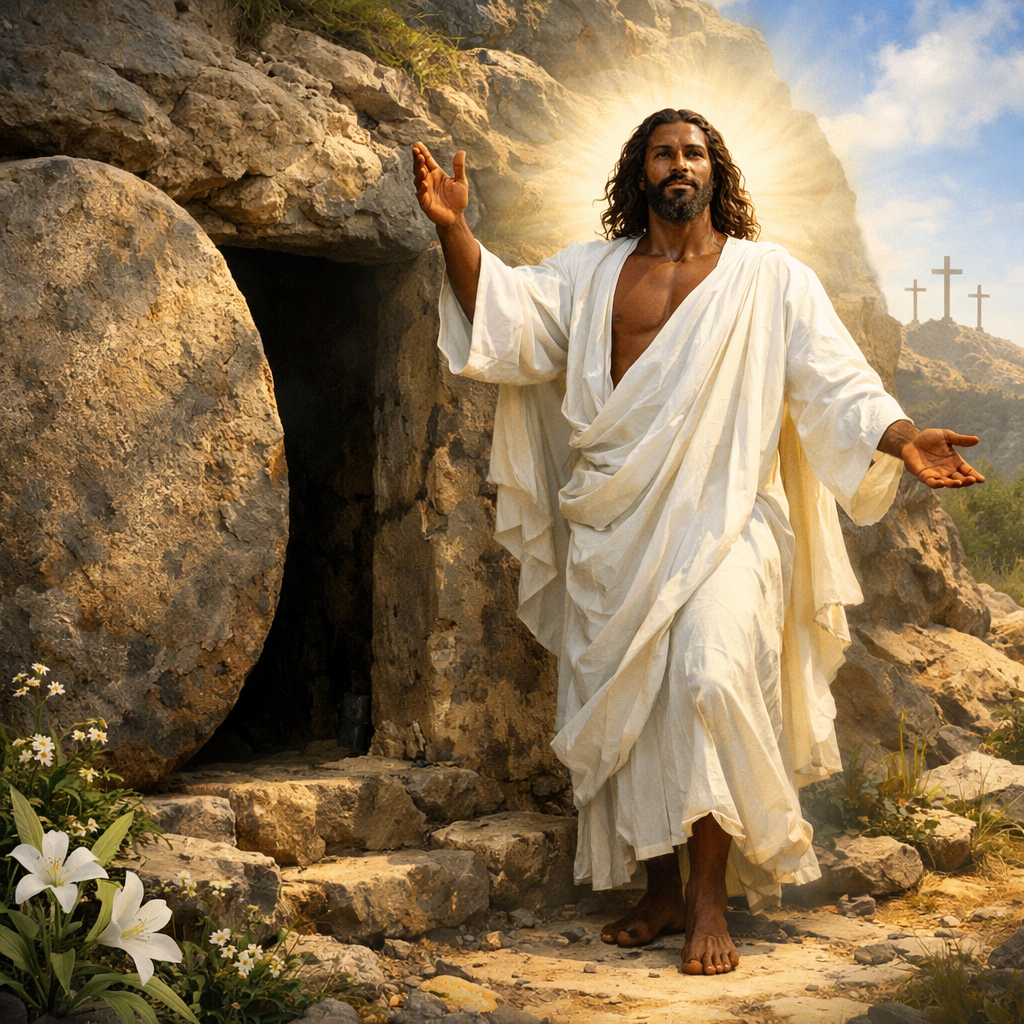
Acts teaches that Jesus’s resurrection confirms his identity, life, and ministry as truthful revelation from God.
One of the constant refrains in the apostolic speeches is that “you crucified Jesus of Nazareth” but “God has raised him up.” As Peter says to the Sanhedrin, “The God of our ancestors raised up Jesus, whom you had killed by hanging him on a tree” (Acts 5:30). The Jewish leaders made a deeply inaccurate assessment of Jesus’s identity when they handed him over to the Romans to be “killed by the hands of those outside the law” (2:23). They not only allowed an innocent man to be crucified, they also rejected “a man attested to you by God with deeds of power, wonders, and signs that God did through him among you” (2:22).
The fact that it is the God of Israel—or as Peter says, “The God of Abraham, the God of Isaac, and the God of Jacob, the God of our ancestors” (Acts 3:13)—who has resurrected Jesus from the dead means that to speak of God is now forever to speak of him as the one who raised Jesus. In other words, Jesus’s teachings and actions are not simply those of a righteous man or a prophet. Rather, they are the truthful revelation of God himself.
God’s resurrection has provided public testimony that Jesus is indeed the Messiah and Son of God.
This is why the apostolic speeches always include a call to repentance—a repentance grounded in a new assessment of Jesus’s identity. The apostolic speeches often acknowledge that the Jewish leaders rejected Jesus in ignorance (e.g., Acts 3:17), but now that God’s resurrection has provided public testimony that Jesus is indeed the Messiah and Son of God, there is no excuse for refusing to embrace Jesus as the “author of life, whom God raised from the dead” (3:15).

2. The enthronement of Christ
Second, in Acts, the resurrection is the event whereby Jesus takes his seat in heaven next to the Father as the eternal Davidic and messianic king.
Recall the promise the angel Gabriel made to Mary in the Gospel of Luke: Her child would be the Son of God who would receive authority to rule over Israel, seated forever on “the throne of his ancestor David”; he would “reign over the house of Jacob forever, and of his kingdom there will be no end” (Luke 1:32–33). Acts, Luke’s second volume, explains how God gives Jesus the throne of David.
Jesus commissions his disciples to stay in Jerusalem in order to receive the Holy Spirit who will empower their mission. Immediately after, he ascends into heaven. In fact, in a span of just a few verses, Acts repeats four times that Jesus is now “in heaven” (Acts 1:9–11).
What does this mean? Is Jesus’s physical absence from earth bad news for the disciples? To the contrary. In the first major apostolic speech, Peter explains the meaning of Jesus’s resurrection and ascension into heaven: It is indeed good news for the disciples and for the world, for this is the event whereby Jesus is established as the eternal messianic king.
In Acts 2:22–36, Peter engages in a fairly complex interpretation of the Old Testament, specifically the Psalter, to show how Jesus’s resurrection and ascension are the means whereby God installs Jesus as the messianic king in heaven. First, Peter interprets Psalm 16 as the words of David about the coming Davidic Messiah. Before quoting the psalm at length, Peter notes, “For David says concerning him” (Acts 2:25). He then quotes Psalm 16:8–11:
I saw the Lord always before me, for he is at my right hand so that I will not be shaken; therefore my heart was glad, and my tongue rejoiced; moreover my flesh will live in hope. For you will not abandon my soul to Hades, or let your Holy One experience corruption. You have made known to me the way of life; you will make me full of gladness with your presence. (Acts 2:25–28)
Peter emphasizes that David is not speaking about himself. Why? Because David’s tomb is public knowledge to all in Jerusalem (Acts 2:29). David’s body has experienced the corruption of death! So Peter declares David must be speaking prophetically of someone else.
Moreover, David knew that God had sworn with an oath to him that he would put one of his “descendants on the throne” (Acts 2:30). It is not David but David’s descendant—Jesus the resurrected Messiah—who has not been abandoned to Hades or experienced corruption (2:31). The resurrection and heavenly ascension is how God makes good on his promise to David in 2 Samuel 7:12: “I will raise up after you your seed, who will come from your body, and I will establish his kingdom.”
Jesus’s resurrection is not a resuscitation or a mere return to mortal existence, then, but the event whereby Jesus reigns over God’s kingdom and shares God’s throne. And this is exactly what Peter declares when he draws upon the words of David once more:
For David did not ascend into the heavens, but he himself says, “The Lord said to my Lord, ‘Sit at my right hand, until I make your enemies your footstool.’” (Acts 2:34–35, quoting Ps 110:1)
David spoke, looking forward to a day when his own descendant, Jesus the Messiah, would be resurrected and exalted at the right hand of the Father as “Lord and Messiah” over his people (Acts 2:36).
In sum, David prophesies of a descendant who will live in God’s presence forever, never experiencing death. God’s resurrection of Jesus the Messiah is that event whereby God exalts the son of David to the right hand of the Father in heaven.
 Logos’s Smart Search in Bible locating and providing a synopsis of key verses on Christ’s resurrection in Acts.
3. The outpouring of the Spirit
Third, according to Acts, the resurrection was necessary for the outpouring of the Holy Spirit.
The complexity of Peter’s speech in Acts 2:22–36 could distract us from why he began it in the first place: what had just taken place at Pentecost. As the believers are gathered together, a remarkable event transpires: “Suddenly from heaven there came a sound like the rush of a violent wind” (2:2), a theophany, whereby the Holy Spirit is poured out upon the people, enabling them to speak about the mighty acts of God in other languages (2:3–4). Jews from every corner of the diaspora are present in Jerusalem to hear these Galileans testify to God’s work in their own languages (2:9–11). Recall that Jesus had twice reminded his disciples to wait in Jerusalem for the promise from the Father, namely, the Holy Spirit (1:4, 8). Jesus had reminded them of the words of John the Baptist, spoken in the Gospel of Luke, that “you will be baptized with the Holy Spirit not many days from now” (1:5; Luke 3:16; cf. Mark 1:8).
Yet this event required interpretation. “All were amazed and perplexed, saying to one another, ‘What does this mean?’ But others sneered and said, ‘They are filled with new wine’” (Acts 2:12–13). So Peter explains that the very first act of the risen Messiah, now enthroned in heaven, was this outpouring of the Holy Spirit. At the high point of his sermon, he declares,
Being therefore exalted at the right hand of God, and having received from the Father the promise of the Holy Spirit, he [Jesus] has poured out this that you both see and hear. (Acts 2:33)
In this we see the close connection between the resurrection of Jesus and the work of the Spirit. For example, later when Peter and John heal the lame man sitting at the gate of the temple, Peter declares that this healing occurred in “the name of Jesus Christ of Nazareth” (Acts 3:6). Peter explains that the exalted Jesus has enabled him to heal the lame man (3:13). The right response from those who hear is to turn to God so that they too might experience “times of refreshing from the presence of the Lord” (3:20). These “times of refreshing” almost certainly refer to the risen Messiah’s ability to share saving blessings with his people through the work of the Spirit.

4. The reign of the king
Fourth, the Acts narrative shows that Jesus’s resurrection means that he is alive and active to accomplish his kingdom work.
Since Jesus is resurrected and ascended to heaven, he is physically absent from his people who await his return (Acts 1:9–11). But Acts is emphatic: Jesus is alive and powerfully present in the world to establish his kingdom.
- We have just seen that the risen Jesus has sent the Spirit upon his people to empower their mission (Acts 1:4–8; 2:1–21, 33). Likewise, when the disciples pray for strength in the face of great suffering, Jesus sends the Spirit to empower them with boldness and great signs “in the name of his holy servant Jesus” (Acts 4:30; emphasis added).
- As Stephen is put to death, he receives a vision of Jesus standing at the right hand of God, indicating that even in the face of suffering, Jesus is present with and vindicates his faithful witnesses (Acts 7:55–60).
- The church’s sense of awe and wonder, incredible unity, and hospitality toward one another come from the powerful presence of Jesus (Acts 2:42–47; 4:32–35; 5:12–16).
- The risen Jesus accomplishes his kingdom work by calling and commissioning his witnesses to move into new geographical territories. Both Paul and Peter receive visions from the risen Christ that call them to share the gospel with new peoples and in new territories (Acts 9:1–16). When Acts notes that Peter has a vision “from heaven” (10:9–16), we know that this is a Christophany, given the emphasis on Jesus’s heavenly location. Peter’s vision of the risen Christ results in the salvation of Cornelius’s household and marks the start of the mission to the gentiles.
- Finally, having raised him from the dead, God appointed Jesus the judge of the world (Acts 17:31).
Conclusion
We understand now why the apostles are to be witnesses of what God has done in Jesus (Acts 1:8), especially in raising him from the dead (1:21–25). Throughout Acts, the Spirit of the risen Jesus enables them to proclaim “God’s deeds of power” to people in every language under heaven (2:11).
More than two thousand years later, the identity and task of the church remains the same. As those who worship the risen and ascended messianic king, we—with the apostles—continue to testify to what God has done and what God continues to do through the Spirit of the risen Christ.
Joshua Jipp’s suggested resources for further study
- Pao, David W. Acts and the Isaianic New Exodus. WUNT 2.130. Mohr Siebeck, 2000.
The Acts of the Risen Lord Jesus: Luke’s Account of God’s Unfolding Plan (New Studies in Biblical Theology | NSBT)
Save $8.00 (28%)
Price: $19.99
-->Regular price: $19.99
God’s Acts for Israel, Gentiles, and Christians: A Theology of the Acts of the Apostles
Price: $49.99
-->Regular price: $49.99
‘But God Raised Him from the Dead’: The Theology of Jesus’ Resurrection in Luke-Acts
Save $11.60 (40%)
Price: $17.39
-->Regular price: $28.99
Related content
- Easter Sermon Ideas: 40 Passages for Proclaiming the Resurrection
- Acts of Persuasion: Why Did Gentiles Convert to Christianity?
- Women in Acts: Women’s Role in the Birth of the Church
- How Jesus’s Death Resolves 6 Key Themes in Luke
- Who Was Luke in the Bible?









 English (US) ·